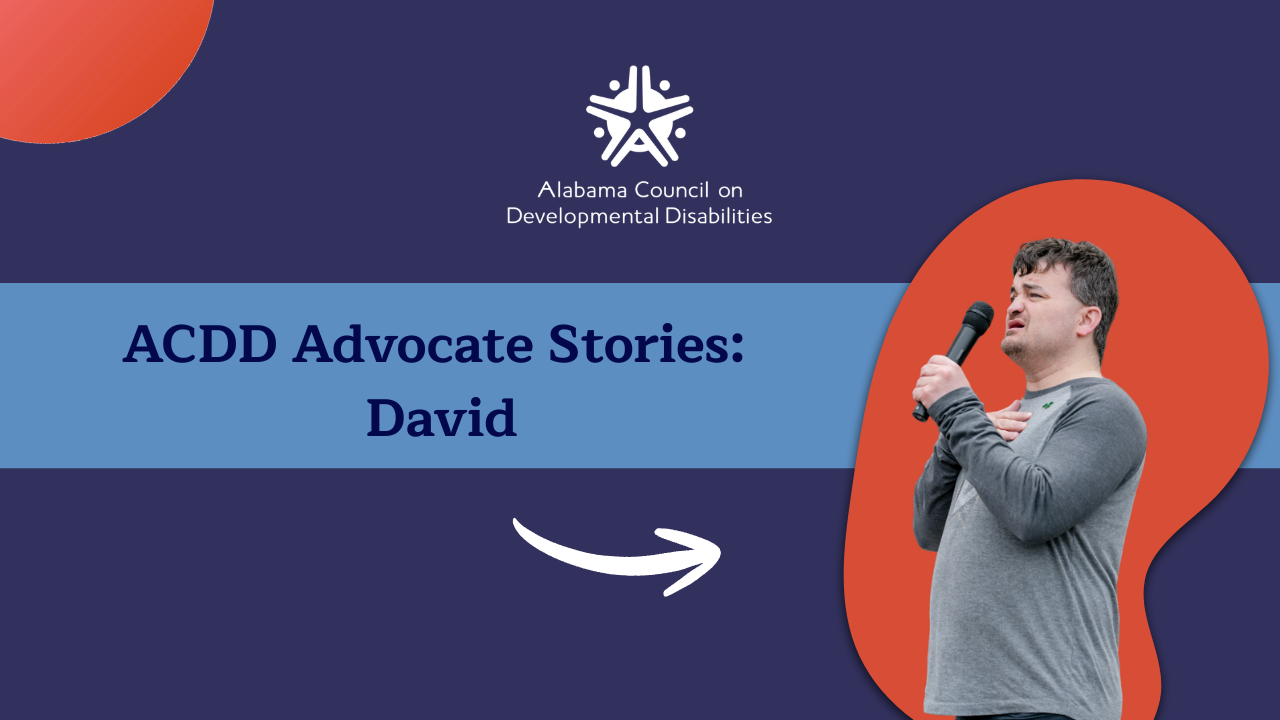
ACDD Advocate Stories: David
David: A Clear Voice for Advocacy
David was born in Tuscaloosa, where music shaped his life from the very beginning. His biological father was a musician who lived in another state but would often visit. During those visits, they made music together, and his father would sometimes bring him new tapes or musical equipment, like a keyboard.
“Music’s been my life,” David says. From an early age, it gave him direction, discipline, and a way to express himself.
When he was four, he moved to Maryland, but Tuscaloosa always remained home in his mind. He had always planned to return, and in 2009, he did. After moving back, David enrolled at the University of Alabama to study music. He joined the Afro-American Gospel Choir and became head musician in 2013. He continued in that role long after graduation. Today, he also serves as music director at Mount Pilgrim Missionary Baptist Church, where he leads, arranges, and supports other musicians.
Diagnosis, Identity, and Self-Understanding
David was born blind due to optic nerve hypoplasia. Near the end of his time at the University of Alabama, he was also diagnosed with autism. When he received the diagnosis, he said, “I knew it. That makes me feel a lot better.”
The diagnosis gave him language for experiences he had struggled to explain. As a child, he had strong texture sensitivities with food. That required patience and creative problem-solving from his mother and teachers. More broadly, the diagnosis helped him understand his thinking style, communication preferences, and need for predictability.
Early Support and Foundations
Independence for David developed over time. With support from family and early educators, including his preschool teacher Betsy Williams, he began building strong foundations early on.
David remembers Miss Betsy as more than a teacher. Along with her co-teacher, Kim Wenth, she created a caring environment that helped him navigate early challenges and build confidence. Miss Betsy’s recent passing deeply touched him. Shortly before she passed, David shared a tribute on Facebook dedicating the song “One Moment in Time” by Whitney Houston to her.
Technology and Daily Life
Today, David manages his own schedule and finances. He uses assistive technology daily, including JAWS and NVDA screen readers, along with an Apple Watch and AirPods to communicate and stay organized. He records and produces music using Logic Pro on a Mac.
Self-advocacy is part of that independence. When his apartment complex was planning to replace carpet with hard flooring, David explained that carpet helps him distinguish rooms by sound and feel. Management ended up replacing the carpet with new carpet as a resolution.
From Music to Leadership
While studying at the University of Alabama, David began in music therapy. He later switched to a general music degree with a minor in sociology.
More recently, David became the acting director of People First, an organization led by and for people with intellectual and developmental disabilities. After longtime director Susan Ellis passed away, the organization faced funding cuts and instability. David stepped in to keep the work moving.
His focus has been practical. He is pursuing grants, building partnerships, and strengthening ties with broader advocacy networks. He wants the organization to be stable and sustainable.
Advocacy in Practice
David stays active in his community. He participates in advocacy training, attends public events, and supports others navigating complex systems. He also continues to lead through music. Singing at church and directing the gospel choir helps him build connections and visibility.
His journey reflects the spirit of Developmental Disabilities Awareness Month: people with disabilities have always been part of our communities. They are leaders today. And they will continue shaping what comes next.