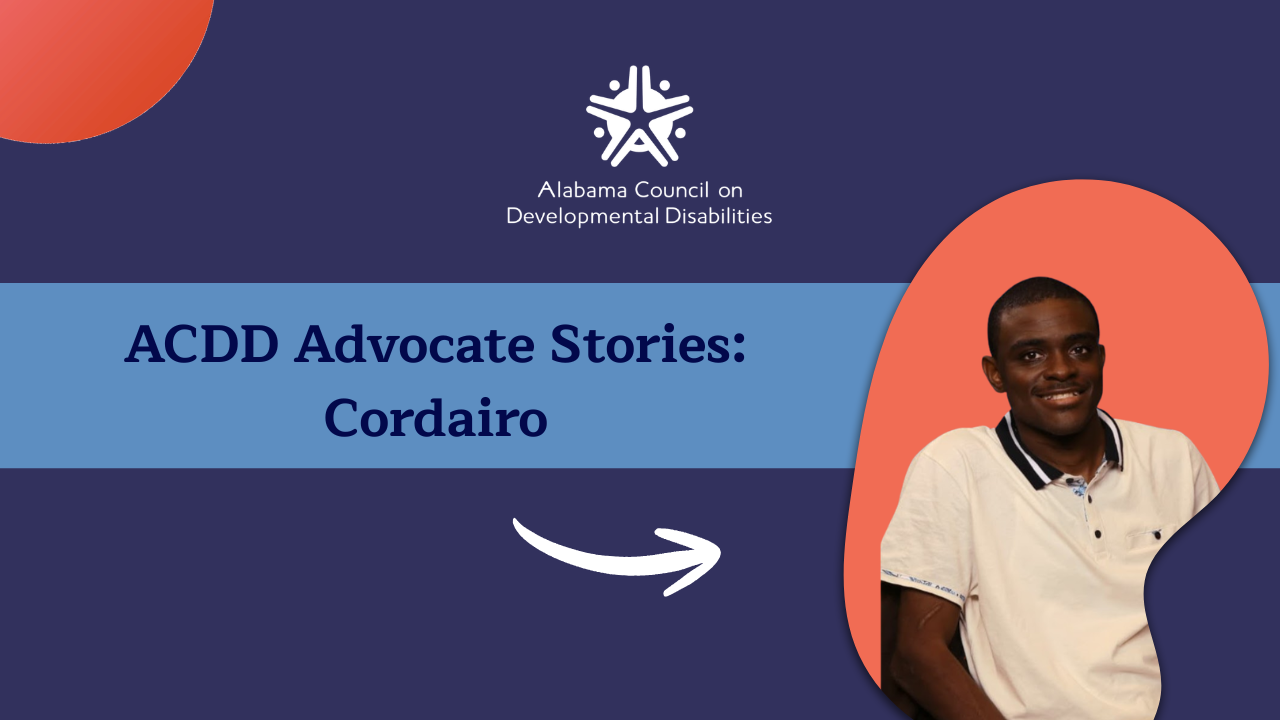
ACDD Advocate Stories: Cordairo
Cordairo: Speaking Up, So Others Can Move Forward
Cordairo grew up in Monroeville, Alabama, in a close-knit community where everyone knew one another. His grandmother and great-grandmother raised him, while his mother worked to support the family. It was a close household, and that support system shaped how he approaches life.
When he was 16, he was in a four-wheeler accident that left him paralyzed from the chest down. He fractured bones in his neck and spent weeks in the hospital. Early on, he needed a ventilator to breathe and developed pneumonia. After leaving the hospital, he had to relearn everyday tasks like feeding himself and getting dressed.
Over time, he regained strength in his arms. In 2005, he received a Baclofen pump to manage severe muscle spasms, which increased his comfort and independence. Today, he manages most aspects of his daily life independently, including scheduling appointments, ordering supplies, and managing his finances.
He sees independence as something that develops gradually. For him, it begins with mindset.
“If your mind doesn’t evolve, you don’t evolve,” he explains.
From Personal Experience to Public Policy
In 2013, he testified at the Alabama State Capitol about Medicaid expansion and its impact on people with disabilities. That experience showed him how personal stories can influence policy decisions.
He later became involved with the Alabama Council of Developmental Disabilities, focusing on practical policy issues that affect daily life. One area he worked on was reducing delays in wheelchair repairs.
“Your wheelchair is your freedom,” he shares.
When repairs take too long, people can miss work, school, and medical appointments. Loaner chairs often don’t fit properly and may cause discomfort. Cordairo and other advocates met with lawmakers to explain how these delays affect real people. Their efforts contributed to legislation aimed at improving the repair process.
Expanding Advocacy to Criminal Justice Reform
More recently, he has focused on supporting people with intellectual and developmental disabilities who become involved in the criminal justice system. Through advocacy training, he learned how policy works and how to engage effectively with legislators. During that process, he noticed a gap: there was no clear, accessible information for people with IDD who are leaving jail or prison.
He is now developing a resource guide that will outline legal rights, voting eligibility, available services, and how to reconnect with community supports. It will also include information on job training and disability services that can help reduce the likelihood of returning to the system.
“You already have a strike against you,” he says. “But you still have rights. You still have access. People just need to know where to look.”
Building Change, Step by Step
For Cordairo, advocacy is about improving systems in practical ways. It’s about making sure policies reflect how people actually live. He focuses on what can be changed and continues building from there.
Cordairo’s journey reflects this year’s Developmental Disabilities Awareness Month theme, WE’RE HERE. THEN, NOW, ALWAYS.
From lived experience to policy change, people with disabilities have always been part of our communities, are active contributors today, and will continue shaping what comes next.