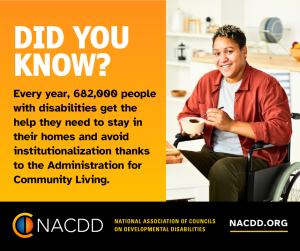
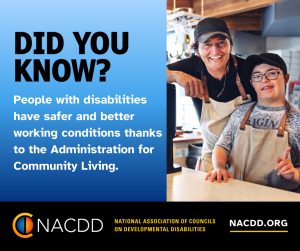
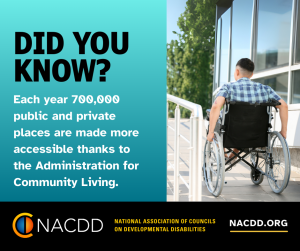
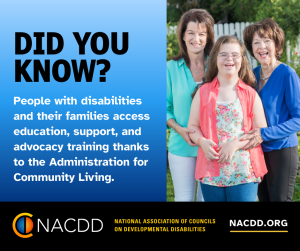
ACDD Launches New “See Me” Campaign for Developmental Disabilities Awareness Month

The Alabama Council on Developmental Disabilities (ACDD) has launched a new campaign to coincide with Developmental Disabilities Awareness Month in March. Each message features a different person with disabilities inviting the viewer to “See me as” an “equal”, “employee”, “graduate”, “neighbor”, “achiever” and more.

The ACDD’s colorful and engaging messages can be seen across social media, digital ads online, and outdoor billboards throughout the state.

“Our survey results showed that there were several concerns among those with developmental disabilities and their families,” said Darryle Powell, Executive Director of the ACDD. “Many times, the general population is unaware of the strides the disabled have made in terms of employment, educational opportunities, and housing.”

Powell continued: “This campaign brings attention to their many achievements in these areas, as well as how they simply want to be seen and accepted by their fellow Alabamians. They want the same things as anyone else, to be active participants in their communities. Through this campaign, we hope to increase understanding, and for people to get to know and appreciate those with developmental disabilities.”

For more information, contact the Alabama Council on Developmental Disabilities at 334-242-3973 or visit www.acdd.org.

ABOUT THE ALABAMA COUNCIL ON DEVELOPMENTAL DISABILITIES
The Alabama Council on Developmental Disabilities (ACDD) is comprised of 36 governor-appointed volunteer members, including people with developmental disabilities, family members, and representatives of public agencies that serve them. The organization is dedicated to the vision that all Alabamians, regardless of disability, will live, learn, work, and play in inclusive communities. To that end, ACDD works towards system changes in aspects of service/support to promote better lives for individuals with developmental disabilities and their families. For more information, visit www.acdd.org.

Alabama Council on Developmental Disabilities creates public awareness video campaign to help vulnerable population on exploitation and human trafficking

January is recognized as National Slavery and Human Trafficking Prevention Month. Human Trafficking is the fastest growing criminal enterprise in the world, the buying and selling of people. Thousands of men, women, girls, and boys in America fall prey to human trafficking, which encompasses both forced labor as well as sexual exploitation at the hands of traffickers. The CDC states that “in the United States, people with disabilities are 4 to 10 times more likely to be victimized than people without them and children with disabilities are more than twice as likely to be victimized as children without them.”

The Alabama Council on Developmental Disabilities (ACDD) in Montgomery, Alabama has awarded Fowler Davis, LLC in Birmingham, Alabama a second grant to continue the educational campaign for trafficking of persons with developmental disabilities. The campaign includes English and Spanish fact sheets, dedicated website, five animated videos on different types of exploitation, a General Awareness video, all in English and Spanish, social media campaign, and digital ads distributed across Alabama newspapers.

“Exploitation and human trafficking of children in Alabama is a silent epidemic happening in rural communities to large cities. Our goal is to provide education and empower this highly-vulnerable population to learn the signs to understand what this means to help prevent them from being exploited in the first place. We commend ACDD on being proactive with this campaign to provide resources and preventive education. Alabama will be the leader with this type of video and educational campaign in the United States,” states Barbara Fowler, Co-Owner of Fowler Davis, LLC.

Darryle Powell, Executive Director of ACDD, says “persons with intellectual and developmental disabilities have been a target population for traffickers due to their vulnerabilities. Therefore, it is especially gratifying to know that Fowler Davis will empower this population through educational campaigns to help prevent them from becoming victims of exploitation and trafficking.”

“Human trafficking is a major problem hiding in plain sight. Alabama has a high percentage of familial trafficking by a parent, family member, caregiver, or trusted adult. Persons with intellectual and developmental disabilities have difficulty understanding risky situations or how to understand who a risky person may be. This campaign will help educate them, along with parents, caregivers, educators, and others,” states Jeff Davis, Co-Owner of Fowler Davis, LLC.

If you see any suspicious activity related to possible human trafficking, do not attempt to confront, as this could jeopardize their safety and your own. Call 9-1-1 immediately. If you need help, or to report suspected human trafficking, call the Department of Homeland Security at 1-866-347-2423 or call the National Human Trafficking Hotline at 1-888-3737-888 or text HELP or INFO to BeFree (233733).

ACDD Posts New Requests for Proposal at acdd.org

The Alabama Council on Developmental Disabilities (ACDD) has announced the availability of funds for innovative proposals that support the Council’s 2022-2026 Goals and Objectives. The four areas represented in the requests for proposal (RFPs) are: 1) education and early intervention; 2) employment; 3) formal and informal community supports; and 4) health.

Details for each of the new RFPs can be found at acdd.org/funding under “Current Requests for Proposal”.

“We’re looking for new ideas for projects that meet our mission,” said Darryle Powell, Executive Director of the ACDD. “Whether aimed at helping people attain employment, educational opportunities, or housing, for example, the projects should be focused on improving the lives of people with developmental disabilities and their families.”

For more information, contact the Alabama Council on Developmental Disabilities at 334-242-3973 or visit acdd.org.

ABOUT THE ALABAMA COUNCIL ON DEVELOPMENTAL DISABILITIES

The Alabama Council on Developmental Disabilities (ACDD) is comprised of 36 governor-appointed volunteer members, including people with developmental disabilities, family members, and representatives of public agencies that serve them. The organization is dedicated to the vision that all Alabamians, regardless of disability, will live, learn, work, and play in inclusive communities. To that end, ACDD works towards system changes in aspects of service/support to promote better lives for individuals with developmental disabilities and their families. For more information, visit acdd.org.

PIP Advisory Council—Become an Advocate for Positive Change

The Partners in Policymaking (PIP) leadership training program believes that the most significant and lasting public policy decisions come from the efforts of those most affected by them. Upon completion of PIP, participants will have the knowledge and skills needed to be advocates for opportunities and supports that promote self-determination, independence, and integration in all aspects of community life for themselves and others. PIP graduates will be prepared to work along with policymakers and will be empowered to be advocates for change.

PIP is sponsored by the Alabama Developmental Disabilities Network, made up of the Alabama Council on Developmental DisabilitiesUAB Civitan Sparks Clinics, and the Alabama Disabilities Advocacy Program.

The Network is putting together an advisory council to support PIP.  If you’d like to serve on the advisory council, fill out this online application.

More information for applicants can be found here. The advisory council application deadline is midnight, Tuesday, June 15, 2021.

2022-2026 Five Year State Plan

Public Comments Requested
(Please use the translation option at the bottom of this page to translate this information into other languages as needed.)

The mission of the Alabama Council on Developmental Disabilities (ACDD) is to promote and support independence, advocacy, productivity, and inclusion for Alabamians with developmental disabilities. Our vision is that all Alabamians, regardless of disability, will live, learn, work, and play in inclusive communities. The Council engages in advocacy, systems change, and capacity building to address the most pressing needs of people with developmental disabilities and their families identified through public input, data, trends, etc. The Council is responsible for developing a state plan, which guides the efforts of the Council. Therefore, the Council is seeking public input on its draft goals and objectives for its 2022-2026 Five-Year State Plan. If approved, the state plan would begin on October 1, 2021, and it would continue through September 30, 2026. Consistent with federal requirements, the draft state plan goals and objectives are being released for a 45-day public comment period starting April 19, 2021, and ending midnight June 2, 2021.

The draft goals and objectives are below. Please use the translation option at the bottom of this page to translate this information into other languages as needed. If you would like to provide feedback, please use the contact form on this page. You can also mail your comments to Darryle Powell and/or Melissa Sylvester at the address below or you can also email your comments to Darryle Powell at darryle.powell@mh.alabama.gov and/or Melissa Sylvester at melissa.sylvester@mh.alabama.gov. Alternate formats are available upon request. All public comments will be reviewed to determine if any changes are needed.

Alabama Council on Developmental Disabilities
RSA Union Building
100 North Union Street, Suite 682
Montgomery, AL 36130-1410

Thank you for your time and feedback.

————————————————

Alabama Council on Developmental Disabilities (ACDD)

2022-2026 Five-Year State Plan Draft Goals and Objectives

Priority Area: Education and Early Intervention

Draft Goal 1: Alabamians with intellectual and developmental disabilities, their families, and their support networks will have more access to and knowledge of rights and resources pertaining to education and early intervention so that individuals with intellectual and developmental disabilities receive education that supports their rights, needs, and interests.

  • Draft Objective 1.1: By 2026, in collaboration with key partners, the ACDD will support the improvement or development of one or more resource or training options for teachers (e.g., special education teachers, general education teachers) and other education professionals or school personnel to address the needs and choices of students with intellectual and developmental disabilities and the concerns of their families.
    • Draft Timeline: 2024-2026
  • Draft Objective 1.2: By 2026, via collaboration with key partners, the ACDD will support or provide opportunities for 300 individuals with intellectual and developmental disabilities and their families to receive resources and training so that people with intellectual and developmental disabilities maximize their educational potential and are integrated and included in all facets of student life in all stages of education.
    • Draft Timeline: 2024-2026
  • Draft Objective 1.3: By 2026, via collaboration with various entities, the ACDD will increase access to information about services and supports related to education and early intervention through outreach, training, and education for 500 individuals with intellectual and developmental disabilities and their families who have limited English proficiency with a specific focus on Spanish speakers. (Targeted Disparity Requirement)
    • Draft Timeline: 2022-2026

Priority Area: Employment

Draft Goal 2: Alabamians with intellectual and developmental disabilities, their families, their support networks, and others statewide will have increased employment supports so that individuals with intellectual and developmental disabilities can obtain competitive, integrated employment.

  • Draft Objective 2.1: By 2026, through partnerships with other stakeholders, the ACDD will promote or expand employment opportunities, training, and/or resources for 500 people with intellectual and developmental disabilities and their families.
    • Draft Timeline: 2022-2026
  • Draft Objective 2.2: By 2026, through education and collaboration, the ACDD will facilitate one or more systemic changes to reduce barriers to competitive, integrated employment for individuals with intellectual and developmental disabilities.
    • Draft Timeline: 2022-2026

Priority Area: Formal and Informal Community Supports

Draft Goal 3: In communities across Alabama, people with intellectual and developmental disabilities and their families will be provided more information leading to greater access to, and/or use of, formal and informal community supports.

  • Draft Objective 3.1: By 2026, via outreach, training, education, and collaboration with local and state partners, the ACDD will enhance the availability of information about formal and informal community supports for 500 Alabamians with intellectual and developmental disabilities and their families who are residents of rural, impoverished Black Belt counties. (Targeted Disparity Requirement)
    • Draft Timeline: 2022-2026
  • Draft Objective 3.2: By 2026, in collaboration with the Alabama Developmental Disabilities (DD) Network Partners, the ACDD will establish or strengthen at least one statewide self-advocacy organization led by people with intellectual and developmental disabilities; support opportunities for at least 20 individuals with intellectual and developmental disabilities who are considered leaders to provide leadership training to other individuals with intellectual and developmental disabilities to become leaders; and support and expand participation of at least 20 individuals with intellectual and developmental disabilities in cross-disability and culturally diverse leadership coalitions. (Self-Advocacy Requirement) (Developmental Disabilities Network Collaboration Requirement)
    • Draft Timeline: 2022-2026
  • Draft Objective 3.3: The ACDD will support or develop initiatives that address at least one emerging issue, trend, or need related to access to or use of formal and informal community supports for people with intellectual and developmental disabilities and their families through outreach, education, and collaboration by 2026. (Optional Emerging Issue or Trend Objective)
    • Draft Timeline: 2022-2026

Priority Area: Health

Draft Goal 4: Alabamians with intellectual and developmental disabilities, their families, and others will receive education and training resulting in improved access to healthcare services and supports for individuals with intellectual and developmental disabilities and their families that addresses their needs and choices and enhances their quality of life.

  • Draft Objective 4.1: By 2026, the ACDD will work with partners to decrease one or more barriers to the receipt of healthcare for people with intellectual and developmental disabilities and their families.
    • Draft Timeline: 2022-2024
  • Draft Objective 4.2: By 2026, the ACDD will work with partners to increase the knowledge of 300 individuals with intellectual and developmental disabilities and their families about healthcare services, supports, and rights through training and the provision of resources.
    • Draft Timeline: 2022-2024


 Please provide comments regarding the above draft goals and objectives by filling out the form below.

    Alabamians with Developmental Disabilities now Eligible for COVID-19 Vaccine

    As the state moves forward with its COVID-19 vaccination plan, those with intellectual and developmental disabilities will be eligible for the vaccine beginning March 22.

    Alabama State Health Officer Dr. Scott Harris made the announcement on Friday, March 12, detailing groups that would receiving extended eligibility as part of Allocation Phase 1c of the state’s vaccination plan.

    “This is great news,” said Darryle Powell, Executive Director of the Alabama Council on Developmental Disabilities (ACDD). “We encourage those with developmental disabilities, and their family members, to take advantage of the expanded distribution of the COVID-19 vaccine. The pandemic has been especially worrisome for those in more physically vulnerable populations, and this should be a big help.”

    Others now eligible to receive the vaccine include those 55 and older, as well as people between the ages of 16 and 64 who have high-risk medical conditions such as cancer, chronic kidney disease, heart failure, and other serious conditions. The list of critical workers eligible has also expanded to include those in waste and wastewater, transportation and logistics, food service, and other occupations.

    Dr. Harris mentioned that expected dose increases from the federal government over the next several weeks prompted the latest expansion of vaccinations. To find a vaccine provider near you, visit the Alabama COVID-19 Dashboard Hub at arcg.is/0brSGj.

    For more information on the Alabama Council on Developmental Disabilities, call 334-242-3973 or visit acdd.org.

    ABOUT THE ALABAMA COUNCIL ON DEVELOPMENTAL DISABILITIES

    The Alabama Council on Developmental Disabilities (ACDD) is comprised of 36 governor-appointed volunteer members, including people with developmental disabilities, family members, and representatives of public agencies that serve them. The organization is dedicated to the vision that all Alabamians, regardless of disability, will live, learn, work, and play in inclusive communities. To that end, ACDD works towards system changes in aspects of service/support to promote better lives for individuals with developmental disabilities and their families. For more information, visit acdd.org.